In celebrating Singapore's 43rd Birthday, I will like to discuss a concern brought up by Banyan Tree Holdings Executive Chairman Mr Ho Kwon Ping recently at the Global Leadership Congress that our schools focused too much on technical education and not enough on character development. While I beg to differ on this point, I do agree that schools can definitely do a lot more in the areas of character development to nurture the development of personality, which is the foundation of leadership.
Back to the metaphor of the compass and map, a good leader is someone who not only has a BIG vision, knows how to navigate using the map, but she must also have the moral courage that is guided by the compass. In this respect, teaming moral courage to live by those values and the technical competency to reach the vision, only then will she fulfill her mission.
I am of the view, since we work closely with schools, that schools do pay sufficient focus on academic results, or in Mr Ho's words; technical education. Many a times, we hear that teachers are finally rewarded or acknowledged for their delivery of results. As such, it is no wonder that technical education remains the main (not sole) emphasis of most schools, and their leaders.
From another perspective, it is also not easy to balance rewards and recognitions with the character development component. One can argue that development of characters and personalities take time and the benefits cannot be seen immediately. Just like, how do we reward my teachers then for how they have developed me while I was in school for nurturing me to be a good and responsible citizen now?
Of course, there can early signals that may indicate that one child will be a good and responsible citizen or even a good leader, while another will become a menace to society. I am not an expert in this area, but did Mas Selamat shows signs of a terrorist while at school and should his teachers be punished for what he has or intend to do now?
I believe you and I can see the flaws in the argument above but instead of focusing on the negatives, let us zoom in on the opportunities instead. First, I will like to categorically state that schools have done or have spent some efforts in character development of the child. No school leaders whom we have spoken to, have insisted that academic results were their only focus, or at least at face value. Many schools, if not all, would have programmes that aim to mould the right character in our students. Whether those programmes have been effective is something we need to examine. Also, whether the teachers have been given proper training to mould the child in the area of character development is another issue we need to study.
Finally, even if the schools choose to strike a balance between character and competence, do the parents share the same view? Or will the parents view academic results as the only yardstick that schools should deliver? And to take an extended view of that argument, do universities here give sufficient emphasis to character development in their enrollment criteria? Do future employers also look into the area of character development in their prospective employees?
I think the answers to the above are all "yes". Which brings to mind the African proverb that "it takes a village to raise a child". Everyone in the community or the society at large has a role to play. Not just the educators, but parents, friends, uncles, aunties, employers, colleagues, politicians, government officials, and the list goes on. Each one of us has a role to play in 'raising the child'. And let us not see this child as your child, or my child, or somebody else's child, lets see this child, the next child that you come across as our child, the child of Singapore. And together we can all help to nurture this child, whether it is in the area of competence or character, lets put our efforts together to raise this child to the fullest of his or her potential. For only if this child can realise his or her potential, to become a leader in his or her own right, will we, as a nation have the realise our country's potential.
And my final request to all schools is that, let us not see student leadership as leadership development for the select few. Lets not narrow our definition of leadership to just leadership by title. For leadership is not a title, but action. Hence, lets define leadership as leadership by choice, for we can put a compass and a map into the hands of every child so that it can guide them towards their vision while living by the right values so as to fulfill their mission.
Thursday, August 07, 2008


Compass and Map
The idea in which I proposed recently, the metaphor of someone with a compass and a map as a "leader" appealed to many whom I have spoken to.
The compass signifies the mission and the values of the person. Armed with both a mission and also a set of values, this person now has a "true north" that guides her actions. Meaning to say, whether she will or will not participates in certain activities will be guided by her "true north", or in other words whether these activities are aligned to her mission and values.
The map represents the path she would take to arrive at her destination. That destination would be her vision, her end in mind, or what she would like to create. That vision will also need to be aligned to her mission and values. Or put it differently, in other to fulfill her mission, she will need to reach her vision. Of course the underlying assumption here is that a leader would have a vision, for the Bible says, where there is no vision, the people will perish.
So, the idea that the map is not the territory means that even with the best laid plans, she might have to change course or navigate around some 'mountains' and 'rivers' to reach her destination. That is not to sound pessimistic but rather to be realistic and pragmatic.
The fundamental flaw in this concept lies in the lack of involving others. As an Afghan proverb puts it succinctly, "if you think you are leading but no one is following you, then you're only talking a walk". This was why we discussed about the issue of BIG dreams in "A Game for Two".
In other to enlist the help of others in achieving our vision, that "end in mind" must be BIG, in the sense that others can participate in, and participate meaningfully too. If it is just to enrich ourselves, often times we will be taking a walk. Or even when people join us in that journey, very likely they will not be in your company for long.
The compass signifies the mission and the values of the person. Armed with both a mission and also a set of values, this person now has a "true north" that guides her actions. Meaning to say, whether she will or will not participates in certain activities will be guided by her "true north", or in other words whether these activities are aligned to her mission and values.
The map represents the path she would take to arrive at her destination. That destination would be her vision, her end in mind, or what she would like to create. That vision will also need to be aligned to her mission and values. Or put it differently, in other to fulfill her mission, she will need to reach her vision. Of course the underlying assumption here is that a leader would have a vision, for the Bible says, where there is no vision, the people will perish.
So, the idea that the map is not the territory means that even with the best laid plans, she might have to change course or navigate around some 'mountains' and 'rivers' to reach her destination. That is not to sound pessimistic but rather to be realistic and pragmatic.
The fundamental flaw in this concept lies in the lack of involving others. As an Afghan proverb puts it succinctly, "if you think you are leading but no one is following you, then you're only talking a walk". This was why we discussed about the issue of BIG dreams in "A Game for Two".
In other to enlist the help of others in achieving our vision, that "end in mind" must be BIG, in the sense that others can participate in, and participate meaningfully too. If it is just to enrich ourselves, often times we will be taking a walk. Or even when people join us in that journey, very likely they will not be in your company for long.
Monday, August 04, 2008
Be the CAUSE that brings about the desired EFFECTS

A World Class Education
“I don't want to send another generation of American children to failing schools. I don't want that future for my daughters. I don't want that future for your sons. I do not want that future for America.”
— Barack Obama, Jefferson-Jackson Dinner, Des Moines, Iowa, November 10, 2007
There are two reasons why I have chosen to be a supporter of Senator Obama. Firstly, I have always been a great fan of individuals with amazing oratorical skills, and Senator Obama has been widely quoted as one of the most eloquent speaker since JFK. It is also my firm believe that individuals who are able to communicate clearly will be able to better lead others towards a noble cause. Secondly, my support for Senator Obama is due largely to his advocacy on educational issues throughout his career.
As someone who firmly believes in the benefits of education and what education can do not just for our youth, as a leveler of societal disparity, and of course as a hope for any country; I can certainly resonate with what Senator Obama has put forth in his views about educational issues.
While I do not profess to be a know-all in his views on education; I am learning through research and reading up on this particular issue. Which is why I got hold of the book, The Audacity of Hope, recently.
I believe once we have set our mind and energy on a particular cause that we sincerely care about and wants to make a difference in this area, our lives will become even more meaningful and purposeful.
As a benefactor of the education system in Singapore, I certainly can speak for its good and also its areas for improvements. There is no perfect system, though hindsight is always 20-20, any anachronistic system that does not seek to change, for the better, serves no one but those who live their lives backwards.
Friday, August 01, 2008
Lucky You
Just today, I had the opportunity to speak with a group of educators. In fact, I enjoyed many such conversations as there are indeed many hidden gems after you ponder over it and reflect upon it.
One of the topics included the kind of advantages the new generation has over their predecessors. This reminded me of a story that was shared with me about a conversation between a child and his grandfather. The child was boasting about what the new generation has created; the internet, starbucks, computers, hybrid cars, space shuttles, and so on. The grandfather immediately shot back, saying that his generation was the one who laid all the foundations for all that were mentioned so that those creations are possible.
Along those lines, one of the educators were saying that the new generation is so lucky to have all the foundations laid out, so that when new recruits join the institution, they could just pick up and go.
This was what got me thinking. You see, back in the 80s, or even up to the 90s, some people believed that knowledge is power. That led to withholding information for fear that if someone were to get hold it, they would gain a competitive edge. So much so that when the term, knowledge worker, was coined, new concepts such as knowledge management tools appear. The whole idea was to codify tacit knowledge. In other words, to capture what you know into documents, manuals, flow charts, process maps so that even if the 'knowledge worker' walks out of the organization, the knowledge is retained. Exciting idea, but feasibility is questionable.
Flowing from that concept of knowledge management is the idea of getting organizations to adopt a particular framework, like the Malcolm Baldridge, as these are tried and tested frameworks adopted by world-class organizations. Hence the thinking behind it was, if your organizations were to adopt the same framework, it, too, can become world-class. Sounds logical but fundamentally difficult to implement.
Here, there are two seemingly different ideas but they are fundamentally the same to me. While it is true that tacit knowledge that is codified can be used and re-used again and again. And as such, these 'best practices' can be quickly adopted by individuals (or organizations as in the case of a world-class organization framework) who may have little or no experience in the area concerned. Some what, it is similar to someone who is being invited to give an after dinner speech but have no idea what to talk about and hence browse the web for witty subjects to present.
Should this person be a class-act in terms of putting up a facade, he may be able to pull this through. But anyone with a little conscience would know that you can fool some of the people some of the time, but you cannot fool all the people all the time. As such, even with free and widely available content, unless the person who is using it has sufficient baseline knowledge of the subject matter, it would be impossible to fake it. Or put it in another way, try memorizing some medical facts and attempt to pass off as a doctor.
So, in my opinion the availability of such wealth of information is good only when we have a purpose for it. For the implementation of the knowledge is not without significant efforts, understanding the intent of the knowledge is fundamental.
The other thing is, even with such wealth of information is not enough to get you ahead. Understanding how to make use of the information is one, knowing how to build upon it is another. Therefore, having a wealth of information do not a wise man make.
One of the topics included the kind of advantages the new generation has over their predecessors. This reminded me of a story that was shared with me about a conversation between a child and his grandfather. The child was boasting about what the new generation has created; the internet, starbucks, computers, hybrid cars, space shuttles, and so on. The grandfather immediately shot back, saying that his generation was the one who laid all the foundations for all that were mentioned so that those creations are possible.
Along those lines, one of the educators were saying that the new generation is so lucky to have all the foundations laid out, so that when new recruits join the institution, they could just pick up and go.
This was what got me thinking. You see, back in the 80s, or even up to the 90s, some people believed that knowledge is power. That led to withholding information for fear that if someone were to get hold it, they would gain a competitive edge. So much so that when the term, knowledge worker, was coined, new concepts such as knowledge management tools appear. The whole idea was to codify tacit knowledge. In other words, to capture what you know into documents, manuals, flow charts, process maps so that even if the 'knowledge worker' walks out of the organization, the knowledge is retained. Exciting idea, but feasibility is questionable.
Flowing from that concept of knowledge management is the idea of getting organizations to adopt a particular framework, like the Malcolm Baldridge, as these are tried and tested frameworks adopted by world-class organizations. Hence the thinking behind it was, if your organizations were to adopt the same framework, it, too, can become world-class. Sounds logical but fundamentally difficult to implement.
Here, there are two seemingly different ideas but they are fundamentally the same to me. While it is true that tacit knowledge that is codified can be used and re-used again and again. And as such, these 'best practices' can be quickly adopted by individuals (or organizations as in the case of a world-class organization framework) who may have little or no experience in the area concerned. Some what, it is similar to someone who is being invited to give an after dinner speech but have no idea what to talk about and hence browse the web for witty subjects to present.
Should this person be a class-act in terms of putting up a facade, he may be able to pull this through. But anyone with a little conscience would know that you can fool some of the people some of the time, but you cannot fool all the people all the time. As such, even with free and widely available content, unless the person who is using it has sufficient baseline knowledge of the subject matter, it would be impossible to fake it. Or put it in another way, try memorizing some medical facts and attempt to pass off as a doctor.
So, in my opinion the availability of such wealth of information is good only when we have a purpose for it. For the implementation of the knowledge is not without significant efforts, understanding the intent of the knowledge is fundamental.
The other thing is, even with such wealth of information is not enough to get you ahead. Understanding how to make use of the information is one, knowing how to build upon it is another. Therefore, having a wealth of information do not a wise man make.
Thursday, July 31, 2008
Patience: Perception and Projection
I admit it. Patience is but one virtue that I need to cultivate. Although people who have known me for sometime will be able to see the improvements I have made. There is, I believe lots of room for improvements.
I mean, I cannot pretend that I do not get agitated when I have to explain something more than once. Neither can I claim to remain cool and calm when things do not move as fast as I would like them to be.
Recently, an audio book I listened to (How to make yourself unforgettable - Dale Carnegie) defined patience as the ability to wait without feeling frustration, anxiety, and anger. There are 3 key learnings I gained from this lesson and they are as follow.
The author gave a scenario like this. It is now 8.45am and you need to be at work by 9am. You are in the queue at Starbucks waiting to get your coffee. Finally there is just one more person in front of you in the queue. While all you want is just coffee; not fancy latte or decaf, the lady in front of you seems to be exploring all options, soy or low-fat milk, with or without whipped, decaf or regular, etc.
The situation is enough to make you scream as you have been standing in line for some time now, and here is this lady (or by now one might have used less than flattering names for her) who seems to take her own sweet time to decide.
Three main concepts proposed by the author are as follow. One, instead of letting the external environment control how you feel, why not choose how you feel about the external environment? In which case, here, you will not be able to control what that lady will do (without violating her rights or being seen as a mad man screaming and shouting at her). Instead, focus on controlling your emotions or choosing the right emotions that will make you feel resourceful.
Leading to that is point 2. Should you experience emotions that place you in a less than resourceful state, why do you want to hold on to those emotions? Do you enjoy feeling this way? If not, why not choose emotions that will put you in a resourceful state?
And finally, would you prefer to be in the company of someone who is in a resourceful state or otherwise? As we are likely to choose the former, so why choose to be in a less than resourceful state and then wonder why do people not like you.
I mean, I cannot pretend that I do not get agitated when I have to explain something more than once. Neither can I claim to remain cool and calm when things do not move as fast as I would like them to be.
Recently, an audio book I listened to (How to make yourself unforgettable - Dale Carnegie) defined patience as the ability to wait without feeling frustration, anxiety, and anger. There are 3 key learnings I gained from this lesson and they are as follow.
The author gave a scenario like this. It is now 8.45am and you need to be at work by 9am. You are in the queue at Starbucks waiting to get your coffee. Finally there is just one more person in front of you in the queue. While all you want is just coffee; not fancy latte or decaf, the lady in front of you seems to be exploring all options, soy or low-fat milk, with or without whipped, decaf or regular, etc.
The situation is enough to make you scream as you have been standing in line for some time now, and here is this lady (or by now one might have used less than flattering names for her) who seems to take her own sweet time to decide.
Three main concepts proposed by the author are as follow. One, instead of letting the external environment control how you feel, why not choose how you feel about the external environment? In which case, here, you will not be able to control what that lady will do (without violating her rights or being seen as a mad man screaming and shouting at her). Instead, focus on controlling your emotions or choosing the right emotions that will make you feel resourceful.
Leading to that is point 2. Should you experience emotions that place you in a less than resourceful state, why do you want to hold on to those emotions? Do you enjoy feeling this way? If not, why not choose emotions that will put you in a resourceful state?
And finally, would you prefer to be in the company of someone who is in a resourceful state or otherwise? As we are likely to choose the former, so why choose to be in a less than resourceful state and then wonder why do people not like you.
Wednesday, July 30, 2008
A Game for Two
Say, if you were invited to an evening with your friends for a game but you were told that only two people can participate at any point in time. Would you go?
Well that depends for most people. Some do not mind just watching by the side. Some may get the kick out of watching who will win. But others may wish to participate so if both slots were taken, they might pass.
In this case, if you are the host, you might not expect a large turn out. Or maybe you do not want a large turn out to begin with.
The same can be said of your dream or vision. Because your dream is a small one, you may find that the people who will come to work along side you may be few. Then again, some of us may not want our dream to be too big, because then you might invite the wrong crowd!
For one, if your dream is big enough then you will find many who will like to be part of the action. Say, Google for example. Because the dream of their founders is likely to be big enough, fun enough, exciting enough, even with lots of testing of new boundaries; that is the reason why, I think, they are able to attract talents to their game.
So, in our last discussion where we talked about having a BIG dream, that is one of the reasons why a bigger dream is always better than a small one.
So, how big is your dream?
Well that depends for most people. Some do not mind just watching by the side. Some may get the kick out of watching who will win. But others may wish to participate so if both slots were taken, they might pass.
In this case, if you are the host, you might not expect a large turn out. Or maybe you do not want a large turn out to begin with.
The same can be said of your dream or vision. Because your dream is a small one, you may find that the people who will come to work along side you may be few. Then again, some of us may not want our dream to be too big, because then you might invite the wrong crowd!
For one, if your dream is big enough then you will find many who will like to be part of the action. Say, Google for example. Because the dream of their founders is likely to be big enough, fun enough, exciting enough, even with lots of testing of new boundaries; that is the reason why, I think, they are able to attract talents to their game.
So, in our last discussion where we talked about having a BIG dream, that is one of the reasons why a bigger dream is always better than a small one.
So, how big is your dream?
Monday, July 28, 2008
The Map is not the Territory Part I
So now that we are equipped with the compass, which will always point towards our true north (mission), we are still short of realising our vision. Given that our vision is the end in mind, besides the compass we will also need a map to help us get there.
The map will be the masterplan that guide us along, providing us with the paths, showing us where the obstacles might be, and even enabling to check against certain milestones. However, the map is not necessarily the territory. In other words, while we plan and draw up the ways in which we will go from point A to point B, we will come across several circumstances where it will take us by surprise. So how we will tackle these circumstances and change our course along the way will depend on 3 things. How we respond to it, what are our strategies, and whether we believe we will overcome it.
How do we form beliefs, or more importantly why do we believe whether we will overcome it will be something we will talk about today.
Let us begin with some questions. What are some beliefs that we all have? Some of us of a certain faith believe in a man we call Jesus Christ. Some of us believe that in order to be rich, we must work hard. While others believe that we must be honest in order to succeed. So where do these beliefs, whether it is true or not, come from? Some of these beliefs were our own past experiences, while others were being passed down from our parents. It could also be a belief that you picked up from a friend, a book, or a movie! Most importantly, in order for you to believe it, you need to have references to back it up. For instance we all believe that a book would not suddenly start floating in the air, because it does not match our references (c.f. Tony Robbins).
Tony also went on to cite that many of you had passed some tests in the past, so you had references that you were smart. So, now lets ask ourselves in order to be a leader, what kind of beliefs must we have?
I think there is basically one fundamental belief we must have. We must believe what our cause is beyond self, meaning our cause must not to solely benefit ourselves. But it must be for a greater good. Donald Trump phrased it differently, but to me it is essentially the same thing. Trump says one must dream big. Vic Johnson says dream big or it doesn't matter. Some people mis-interpret it as being greedy. They think, having enough is enough so why dream big. Of course if we dream big just so as to benefit only ourselves then it is greed. Else, its about going for something that is beyond you. Something larger than you. Only if its larger than you will you be able to involve others in your dreams. And only when others are involved will they be excited.
The map will be the masterplan that guide us along, providing us with the paths, showing us where the obstacles might be, and even enabling to check against certain milestones. However, the map is not necessarily the territory. In other words, while we plan and draw up the ways in which we will go from point A to point B, we will come across several circumstances where it will take us by surprise. So how we will tackle these circumstances and change our course along the way will depend on 3 things. How we respond to it, what are our strategies, and whether we believe we will overcome it.
How do we form beliefs, or more importantly why do we believe whether we will overcome it will be something we will talk about today.
Let us begin with some questions. What are some beliefs that we all have? Some of us of a certain faith believe in a man we call Jesus Christ. Some of us believe that in order to be rich, we must work hard. While others believe that we must be honest in order to succeed. So where do these beliefs, whether it is true or not, come from? Some of these beliefs were our own past experiences, while others were being passed down from our parents. It could also be a belief that you picked up from a friend, a book, or a movie! Most importantly, in order for you to believe it, you need to have references to back it up. For instance we all believe that a book would not suddenly start floating in the air, because it does not match our references (c.f. Tony Robbins).
Tony also went on to cite that many of you had passed some tests in the past, so you had references that you were smart. So, now lets ask ourselves in order to be a leader, what kind of beliefs must we have?
I think there is basically one fundamental belief we must have. We must believe what our cause is beyond self, meaning our cause must not to solely benefit ourselves. But it must be for a greater good. Donald Trump phrased it differently, but to me it is essentially the same thing. Trump says one must dream big. Vic Johnson says dream big or it doesn't matter. Some people mis-interpret it as being greedy. They think, having enough is enough so why dream big. Of course if we dream big just so as to benefit only ourselves then it is greed. Else, its about going for something that is beyond you. Something larger than you. Only if its larger than you will you be able to involve others in your dreams. And only when others are involved will they be excited.
Friday, July 25, 2008
Leadership Compass Part III
Given that, we will next look at the word "influence" to see how we can expand on it. Taking the cue from Stephen R. Covey's circle of influence, we know it is about working from inside-out. In other words, our ability to influence should be from within and not from the outside.
That is not to say that we do not at all rely on 'authority' to assert our influence. We may very well need to from time to time. Having said that, it we solely rely on 'authority' then our circle of influence is not only limited but we will also feel insecure due to the fact that there will always be situations where we have little 'authority'.
Instead, according to the ideas proposed by Stephen R. Covey, working from the inside-out allows us to tap into our internal source of security. Using this simple yet powerful concept, we then need to know how we can first, work on our circle of influence and second, expand our circle of influence.
It is here where I will like to propose the concept of neurological levels of change, first introduced by Gregory Bateson, then popularized by Robert Dilts in NIP, as a tool to help us work on our circle of influence, then back to using Covey's idea of the 7 Habits (I am now practising the 8th Habit) to expand on our circle of influence.
Using Bateson's neurological levels of change, one will start by defining your identity first. According to other scholars, that would involve shaping your mindset, while the others see it as your perspective of things. For instance if you see (perspective) yourself as someone who is an optimist (identity), very often you will be likely think (mindset) in a positive fashion. While someone who is a pessimistic (identity) person, you will likely think (mindset) the worst about things because of the way you perceive (perspective) it.
Now, that does not mean we should all go out there and just be positive all the time. There are times we should not be positive. Having said that, whether we are positive or negative in terms of our perspective, what is more importantly is what we will do in any particular situation, especially the challenging ones. For instance, in my previous blog, "There's opportunities in every crisis", I was sharing about my acrimonious situation when I was working with a friend. Someone with a different mindset will most definitely take different actions from me. I am not saying what I did is the most effective, its just the most effective for me.
So, if given a certain mindset, perspective, or identity we will take different actions (even with the same mindset, perspective, or identity we can still make differing decisions), we then need to ask ourselves how is it possible. The answers lie in the neurological levels of change, which are our beliefs, strategies, and behaviours. And the best part of it all is, it is a skill set, which means we can learn, practice, refine, and apply.
That is not to say that we do not at all rely on 'authority' to assert our influence. We may very well need to from time to time. Having said that, it we solely rely on 'authority' then our circle of influence is not only limited but we will also feel insecure due to the fact that there will always be situations where we have little 'authority'.
Instead, according to the ideas proposed by Stephen R. Covey, working from the inside-out allows us to tap into our internal source of security. Using this simple yet powerful concept, we then need to know how we can first, work on our circle of influence and second, expand our circle of influence.
It is here where I will like to propose the concept of neurological levels of change, first introduced by Gregory Bateson, then popularized by Robert Dilts in NIP, as a tool to help us work on our circle of influence, then back to using Covey's idea of the 7 Habits (I am now practising the 8th Habit) to expand on our circle of influence.
Using Bateson's neurological levels of change, one will start by defining your identity first. According to other scholars, that would involve shaping your mindset, while the others see it as your perspective of things. For instance if you see (perspective) yourself as someone who is an optimist (identity), very often you will be likely think (mindset) in a positive fashion. While someone who is a pessimistic (identity) person, you will likely think (mindset) the worst about things because of the way you perceive (perspective) it.
Now, that does not mean we should all go out there and just be positive all the time. There are times we should not be positive. Having said that, whether we are positive or negative in terms of our perspective, what is more importantly is what we will do in any particular situation, especially the challenging ones. For instance, in my previous blog, "There's opportunities in every crisis", I was sharing about my acrimonious situation when I was working with a friend. Someone with a different mindset will most definitely take different actions from me. I am not saying what I did is the most effective, its just the most effective for me.
So, if given a certain mindset, perspective, or identity we will take different actions (even with the same mindset, perspective, or identity we can still make differing decisions), we then need to ask ourselves how is it possible. The answers lie in the neurological levels of change, which are our beliefs, strategies, and behaviours. And the best part of it all is, it is a skill set, which means we can learn, practice, refine, and apply.
Leadership Compass Part II
Here, I will like to the scope of leadership. If we acknowledge that we can be a leader in one aspect but a follower in another, then the scope of leadership expands! For instance, you can be a leader in your professional life but in your 'people' life, you are a follower as your friend might be a better organiser for get-togethers. Or you might be a leader in your community but at work you are a follower.
So, to be a true leader, to me, we must be able to influence with integrity and we must also have the necessary technical competencies in the area where we want to lead. Let's look at integrity for a moment. Would you also agree that other than integrity we will also need to be honest and sincere, along with some other virtues. In a word, we can call them, "values".
Therefore, imagine now on your right palm you have all the necessary competencies in the area that you would like to lead. And even if you did not have them, you will be able to learn, just like learning to use the chopsticks for the first time. And on your left palm, you will have all the right values that will guide you to behave in the appropriate manner.
So, to be a true leader, to me, we must be able to influence with integrity and we must also have the necessary technical competencies in the area where we want to lead. Let's look at integrity for a moment. Would you also agree that other than integrity we will also need to be honest and sincere, along with some other virtues. In a word, we can call them, "values".
Therefore, imagine now on your right palm you have all the necessary competencies in the area that you would like to lead. And even if you did not have them, you will be able to learn, just like learning to use the chopsticks for the first time. And on your left palm, you will have all the right values that will guide you to behave in the appropriate manner.
Thursday, July 24, 2008
Leadership Compass Part I
I thought the metaphor of using a compass fits squarely with the identity and responsibilities of a leader. One of the schools we are working with once asked me how would I define "leadership".
Without a second thought I said, "two words"; influence and integrity. I mentioned influence because based on the works of John C. Maxwell, he proposes the idea that a leader is someone who is in the position to influence. I added integrity because someone like Hitler certainly has influence but integrity, he has not.
As I go through some other literature such as "The Speed of Trust" by Stephen M.R. Covey, he proposes the idea that having integrity is but only one part of the equation. He says, in order for someone to trust you, so you can influence them, you must also have competence. He went on to site examples which I can definitely relate to. My wife certainly trust me, but not in the area of cutting her hair! That competency I have not. So in this respect, she does not entrust her crowning glory to me.
Without a second thought I said, "two words"; influence and integrity. I mentioned influence because based on the works of John C. Maxwell, he proposes the idea that a leader is someone who is in the position to influence. I added integrity because someone like Hitler certainly has influence but integrity, he has not.
As I go through some other literature such as "The Speed of Trust" by Stephen M.R. Covey, he proposes the idea that having integrity is but only one part of the equation. He says, in order for someone to trust you, so you can influence them, you must also have competence. He went on to site examples which I can definitely relate to. My wife certainly trust me, but not in the area of cutting her hair! That competency I have not. So in this respect, she does not entrust her crowning glory to me.
Friday, July 18, 2008
There's opportunity in every crisis
Adversity gives us opportunities to grow. And we usually get what we work for. If we have problems and overcome them, we grow tall in character. — J. Willard Marriott Sr.
You might already have heard of this, that the chinese character for danger has the word opportunity in it. Personally, I was in an extremely precarious situation in 2001 where an offer to work with a friend turned out horribly wrong.
There were lots of finger-pointing, character assassination, fear, intimidation, and even potential lengthy law suits coming at me after I have decided to leave the company. I was at a lost as to what I'm supposed to do.
Then, how it helped me overcome all of that, and more, was to use a metaphor. My choice of a metaphor was that of a soldier. And it goes something like this.
Imagine a soldier and his platoon mates engaged in a fire battle with the enemy. All his other platoon mates are dead. He's down to his last magazine of ammunition. He is in a fox-hole. At this moment, the enemy doesn't know he is there. He has two options.
They are, (i) To stay put and wait till the enemy comes close enough. With his remaining ammunition, he will put up his last fight. (ii) To get out of the fox-hole, run tactically towards his enemy. And shoot some along the way.
If he chose option (i), he may end up dying of hunger and cold in the fox-hole or the enemy may outnumber him and kill him. If he chose option (ii), he may end up dying from the exchange of fire as he marches towards the enemy. So it looks like either way, he'll be dead. And being a soldier, its an honour to die fighting the enemy courageously rather than hiding in the fox-hole and hoping the enemy will not find him but die instead of hunger or from enemy's ambush.
Given that as the context of the metaphor, I then asked myself which choice should I make. It seems like either way, I'll die. But if I submit to the crisis, and pray for the storm to be over, and even if I survive, I will not be able to look myself in the mirror with integrity.
So, after consulting with a friend (thank you Teck!), I decided to move on and do what I need to do. And I must say that thank you to the forces that guided me through the last few years; I have managed to get out of the precarious situation and start all over again. At least, I can look myself in the mirror with integrity.
And that was what led me to write my own quote, which I'll like to share it with you here:
Life is full of risks, but until you turn them into opportunities, they will always remain uncertain. — Melvyn Tan
Wednesday, July 16, 2008
Quotes help us "think, rethink, unthink"
Today's daily quote from FranklinCovey is the following:
Do you like reading quotes? Personally, one of my hobbies these days; besides Aikido and reading, is to collect quotes. One of the reasons why I started collecting quotes is because it can help me learn.
We all go through the learning process of (1) unconscious incompetence, (2) conscious incompetence, (3) conscious competence, and (4) unconscious competence.
How quotes help me learn is because due to the manner in which I was 'conditioned', I may respond to a given situation in a predicted way. For instance, when we hear about investments, many of us will think about risk and about the possibility of losing money. As such, whenever we are introduced to any investment opportunities, one of the first questions many of us ask is, "will we lose our money".
That is the reason why, I think, many investment products these days are labeled, "capital guaranteed", or in other words, you will not lose your initial capital. The flip side of that is, well, your upside can also be limited.
And the reason why many of us will ask that question is either because we have had previous experiences of losing our initial capital when we made an investment or we have heard of others who lost their initial capital investing in some products. And because we have been 'conditioned' to this way of thinking, we have developed an unconscious competence towards investments. Every time someone says "investment", we go "will lose money or not".
One of the best minds in investment, according to my perception, is Donald Trump. I recalled reading in "Why We Want You To Be Rich" is on the topic of investment. He introduced the concept of "investing to win" vs "investing so not to lose" in one of the chapters. And that got me THINKING.
Wow! What a great concept! If I choose to THINK "invest to win", then of course with that mindset, I will be looking out for investment vehicles that allow me to do just that! So that is when I RETHINK about the various investment avenues that will allow me to "invest to win". Subsequently, that led me to the concept of Value Investing, whereby you invest in companies that are able to add value for their shareholders, which according to Buffett, there are 9 rules to follow.
And once I have identified the various investment vehicles that allow me to "invest to win", I will put all my money where my mouth is. Right? Well, not really. Because now, with this new mindset, I could possibly narrow my options to just companies' equity! As such, I may miss out on other possibilities! Therefore, even with the new mindset, there is a need to UNTHINK.
And the amazing thing is, when I UNTHINK, the number of other opportunities appear right before me. Many of which have always been there but I just didn't see it.
So in order to help me RETHINK and UNTHINK, I rely on quotes from inspirational leaders in their own field to broaden my perspectives, see things from a different angle, explore other paths, seek out different solutions.
Of course, one of my favourite quotes (or more like a tagline, though it is grammatically wrong) is that of Apple's.
THINK DIFFERENT.
Write down on paper your goal in life. With that down in black and white, we really can get somewhere. Few can define their goal, much less write it. You cannot find happiness until your goal is clear and in view. — Ross Byron
Do you like reading quotes? Personally, one of my hobbies these days; besides Aikido and reading, is to collect quotes. One of the reasons why I started collecting quotes is because it can help me learn.
We all go through the learning process of (1) unconscious incompetence, (2) conscious incompetence, (3) conscious competence, and (4) unconscious competence.
How quotes help me learn is because due to the manner in which I was 'conditioned', I may respond to a given situation in a predicted way. For instance, when we hear about investments, many of us will think about risk and about the possibility of losing money. As such, whenever we are introduced to any investment opportunities, one of the first questions many of us ask is, "will we lose our money".
That is the reason why, I think, many investment products these days are labeled, "capital guaranteed", or in other words, you will not lose your initial capital. The flip side of that is, well, your upside can also be limited.
And the reason why many of us will ask that question is either because we have had previous experiences of losing our initial capital when we made an investment or we have heard of others who lost their initial capital investing in some products. And because we have been 'conditioned' to this way of thinking, we have developed an unconscious competence towards investments. Every time someone says "investment", we go "will lose money or not".
One of the best minds in investment, according to my perception, is Donald Trump. I recalled reading in "Why We Want You To Be Rich" is on the topic of investment. He introduced the concept of "investing to win" vs "investing so not to lose" in one of the chapters. And that got me THINKING.
Wow! What a great concept! If I choose to THINK "invest to win", then of course with that mindset, I will be looking out for investment vehicles that allow me to do just that! So that is when I RETHINK about the various investment avenues that will allow me to "invest to win". Subsequently, that led me to the concept of Value Investing, whereby you invest in companies that are able to add value for their shareholders, which according to Buffett, there are 9 rules to follow.
And once I have identified the various investment vehicles that allow me to "invest to win", I will put all my money where my mouth is. Right? Well, not really. Because now, with this new mindset, I could possibly narrow my options to just companies' equity! As such, I may miss out on other possibilities! Therefore, even with the new mindset, there is a need to UNTHINK.
And the amazing thing is, when I UNTHINK, the number of other opportunities appear right before me. Many of which have always been there but I just didn't see it.
So in order to help me RETHINK and UNTHINK, I rely on quotes from inspirational leaders in their own field to broaden my perspectives, see things from a different angle, explore other paths, seek out different solutions.
Of course, one of my favourite quotes (or more like a tagline, though it is grammatically wrong) is that of Apple's.
THINK DIFFERENT.
Tuesday, July 15, 2008
Don't Eat The Last (Siew Mai) Donut
I saw this lady reading this book on the train. Out of curiosity, I google-d it and found out it is a book about social etiquette at a business meal setting. Some key notes include, always pass the salt and pepper together (boy, am I guilty of this one in the past), order something easy to eat like fish and chips (and be accused of being unimaginative - but I like my fish!), break your bread into small pieces (that one I know; visualize you just stuffed a huge piece and need to speak!), and never wear a napkin around the neck; that's for babies (just watch out for that Calvin Klein tie in the soup).
Interesting pointers that some of us already knew (whether we practice it is another thing all together) and some we never knew (I swear I never knew about the salt and pepper).
Before I head out to consult my image consultant (there is 1 celebrated image consultant that seems to remember me though we've never conducted any business dealings before), let me, ahem, attempt a few tips here based on an Asian setting. And of course invite anyone who has additional pointers or notes to share it here.
1) Look out for where you sit. Always take the best seat in the house. So that your prospect would not be distracted by who's walking in or out of the restaurant. Of course its not always possible, so get a private room, or order your food in such a way that it comes in gradually.
2) Don't even think about ordering a laksa! Unless of course you fancy little stains of laksa gravy as designs on your Hugo Boss white shirt!
3) Don't pour vinegar into a saucer for dipping. The smell irritates most people unless you need to mask your prospect's body odour.
4) Pass both the pepper and vinegar together for the shark's fins. Boy, is this an original thought or what?!
I can't think of anymore at this point. Any takers?
Interesting pointers that some of us already knew (whether we practice it is another thing all together) and some we never knew (I swear I never knew about the salt and pepper).
Before I head out to consult my image consultant (there is 1 celebrated image consultant that seems to remember me though we've never conducted any business dealings before), let me, ahem, attempt a few tips here based on an Asian setting. And of course invite anyone who has additional pointers or notes to share it here.
1) Look out for where you sit. Always take the best seat in the house. So that your prospect would not be distracted by who's walking in or out of the restaurant. Of course its not always possible, so get a private room, or order your food in such a way that it comes in gradually.
2) Don't even think about ordering a laksa! Unless of course you fancy little stains of laksa gravy as designs on your Hugo Boss white shirt!
3) Don't pour vinegar into a saucer for dipping. The smell irritates most people unless you need to mask your prospect's body odour.
4) Pass both the pepper and vinegar together for the shark's fins. Boy, is this an original thought or what?!
I can't think of anymore at this point. Any takers?
Leadership Choices
How do you define Leadership?
Personally, one of my favourite quotes about leadership is by John Quincy Adams, the Sixth President of the United States of America. He said that, “If your actions inspire others to dream more, learn more, do more and become more, you are a leader." A leader is someone who has a vision or a dream that is beyond himself as a person. Just like what Jim Collins called the Level 5 Leadership. Collins explained that a Level 5 Leader must create superb results, a clear catalyst in the transition from good to great. At the same time, demonstrates a compelling modesty, shunning public adulation; never boastful. She must demonstrate an unwavering resolve to do whatever must be done to produce the best long-term results, no matter how difficult and acts with quiet, calm determination; relies principally on inspired standards, not inspiring charisma, to motivate. Additionally, the Level 5 Leader is someone who sets the standard of building an enduring great company; will settle for nothing less. Often, you will find her channeling ambition into the company, not the self; sets up successors for even greater success in the next generation. Collins also describes that she looks in the mirror, not out the window, to apportion responsibility for poor results, never blaming other people, external factors, or bad luck but looks out the window, not in the mirror, to apportion credit for the success of the company—to other people, external factors, and good luck.
Another interesting question that somewhat creates a dichotomy amongst scholars and novices alike is, “Are leaders made or born?” I believe that in each and every one of us we have the ability to become a leader. It may not be leadership in the corporate setting. However, leadership can take on various forms and at numerous levels. For instance, a stay-home mom is a leader where she makes the choice of what is best for her offspring. Take for instance when crisis rears its ugly head, that is when ordinary folks like you and I take on the personal responsibility to lead in such situations. September 11 was a clear example where the average firefighter chooses to lead in such trying moments for the better sake of humanity. In a somewhat less dramatic context, we lead our friends to the best place for food, drinks, or party. At a more humble level, we sometimes take the lead to undertake the necessary activities at home. Its subconscious and generally the reward were never on our mind. More often, it is a matter of rectitude that leads us to make a particular choice.
Of course many of us struggle each day to choose what we think we can and cannot do for others. One commonality amongst us is the need to feel that we have in some ways; significance or otherwise, made a positive contribution to the environment in which we live. No one will confess to a live of insignificance. Even our stay-home mom wants to be able to contribute in some ways to her offspring. There are also some of us who have been through so much pain and misery. At times some of us feel that our suffering is “rental” for our occupancy of the planet. What we need to constantly remind ourselves is to embrace all these pain, misery, and suffering; to acknowledge their existence and even appreciate it. It is this very pain, misery, and suffering that can alter our experiences in life and also help shape us and our destiny. Those in position of leadership or influence will also know that our choice of what to make out of these experiences, unpleasant as it may seems, that will enable us to redefine the quality of our life. At times, what you need is focus and belief. And the very fact that despite all these unpleasant experiences around you, you are able to maintain your focus and hold firm your unshakable beliefs that will allow you to grow stronger. What’s more interesting is, sometimes we fail to see that our leaders are not men and women of high office or of highly admirable acts of heroism. Sometimes the very leaders that we do not take notice are the ones that are right in front of us. Our spouses, our kids, our parents, our friends, our co-workers, and even our pets!
Often times, people have the misconception that to be a leader, you need to do great things. No doubt, great things must be done, but the definition of great is a matter of perspectives. Just take a look at the dailies and you will find that there are so many events and situations in the way that we feel sorry about. There are global issues that need to be addressed. There are certain individuals who we feel should be removed from where they are. And you can go on and whip yourself into a nice frenzy just by dwelling on these issues. What they fail to understand is, these are not things that can be changed or addressed at their current capacities, where they are at now. But there’s something that they can do, which is right in front of them. Day-in, day-out. You can go out in your neighbourhood and make a choice. The choice to not litter, the choice to not be angry with someone if they are in your way when you are late, the choice to be kind to the next person you meet tomorrow, the choice to say thank you to the next person who serves you, the choice to give way when someone tries to cut into your lane while driving. These and all are the choices that you can make.
And if you want to make a leadership choice, you can start by making a choice to adopt a different perspective of things, to see things through a different lens, to view it from another angle. Once you make that first choice, it will then impact on those around you, as your choices will allow them to understand that things are not always what they seem, that objects in the rear-view mirror appears may appear closer than they are. To me, this is perhaps one of the most difficult choices you need to make. However, once you choose to make it a part of you, things around you will change because you changed.
Personally, one of my favourite quotes about leadership is by John Quincy Adams, the Sixth President of the United States of America. He said that, “If your actions inspire others to dream more, learn more, do more and become more, you are a leader." A leader is someone who has a vision or a dream that is beyond himself as a person. Just like what Jim Collins called the Level 5 Leadership. Collins explained that a Level 5 Leader must create superb results, a clear catalyst in the transition from good to great. At the same time, demonstrates a compelling modesty, shunning public adulation; never boastful. She must demonstrate an unwavering resolve to do whatever must be done to produce the best long-term results, no matter how difficult and acts with quiet, calm determination; relies principally on inspired standards, not inspiring charisma, to motivate. Additionally, the Level 5 Leader is someone who sets the standard of building an enduring great company; will settle for nothing less. Often, you will find her channeling ambition into the company, not the self; sets up successors for even greater success in the next generation. Collins also describes that she looks in the mirror, not out the window, to apportion responsibility for poor results, never blaming other people, external factors, or bad luck but looks out the window, not in the mirror, to apportion credit for the success of the company—to other people, external factors, and good luck.
Another interesting question that somewhat creates a dichotomy amongst scholars and novices alike is, “Are leaders made or born?” I believe that in each and every one of us we have the ability to become a leader. It may not be leadership in the corporate setting. However, leadership can take on various forms and at numerous levels. For instance, a stay-home mom is a leader where she makes the choice of what is best for her offspring. Take for instance when crisis rears its ugly head, that is when ordinary folks like you and I take on the personal responsibility to lead in such situations. September 11 was a clear example where the average firefighter chooses to lead in such trying moments for the better sake of humanity. In a somewhat less dramatic context, we lead our friends to the best place for food, drinks, or party. At a more humble level, we sometimes take the lead to undertake the necessary activities at home. Its subconscious and generally the reward were never on our mind. More often, it is a matter of rectitude that leads us to make a particular choice.
Of course many of us struggle each day to choose what we think we can and cannot do for others. One commonality amongst us is the need to feel that we have in some ways; significance or otherwise, made a positive contribution to the environment in which we live. No one will confess to a live of insignificance. Even our stay-home mom wants to be able to contribute in some ways to her offspring. There are also some of us who have been through so much pain and misery. At times some of us feel that our suffering is “rental” for our occupancy of the planet. What we need to constantly remind ourselves is to embrace all these pain, misery, and suffering; to acknowledge their existence and even appreciate it. It is this very pain, misery, and suffering that can alter our experiences in life and also help shape us and our destiny. Those in position of leadership or influence will also know that our choice of what to make out of these experiences, unpleasant as it may seems, that will enable us to redefine the quality of our life. At times, what you need is focus and belief. And the very fact that despite all these unpleasant experiences around you, you are able to maintain your focus and hold firm your unshakable beliefs that will allow you to grow stronger. What’s more interesting is, sometimes we fail to see that our leaders are not men and women of high office or of highly admirable acts of heroism. Sometimes the very leaders that we do not take notice are the ones that are right in front of us. Our spouses, our kids, our parents, our friends, our co-workers, and even our pets!
Often times, people have the misconception that to be a leader, you need to do great things. No doubt, great things must be done, but the definition of great is a matter of perspectives. Just take a look at the dailies and you will find that there are so many events and situations in the way that we feel sorry about. There are global issues that need to be addressed. There are certain individuals who we feel should be removed from where they are. And you can go on and whip yourself into a nice frenzy just by dwelling on these issues. What they fail to understand is, these are not things that can be changed or addressed at their current capacities, where they are at now. But there’s something that they can do, which is right in front of them. Day-in, day-out. You can go out in your neighbourhood and make a choice. The choice to not litter, the choice to not be angry with someone if they are in your way when you are late, the choice to be kind to the next person you meet tomorrow, the choice to say thank you to the next person who serves you, the choice to give way when someone tries to cut into your lane while driving. These and all are the choices that you can make.
And if you want to make a leadership choice, you can start by making a choice to adopt a different perspective of things, to see things through a different lens, to view it from another angle. Once you make that first choice, it will then impact on those around you, as your choices will allow them to understand that things are not always what they seem, that objects in the rear-view mirror appears may appear closer than they are. To me, this is perhaps one of the most difficult choices you need to make. However, once you choose to make it a part of you, things around you will change because you changed.
Monday, July 14, 2008
A Powerful Method of Communication
We spend most of our waking moment communicating with others, letting others know where we are going (when you take a cab), what we want (when we order our food), how we want things done (speaking to our team members at work).
Many a times we do not realise that we also communicate in a non-verbal manner. For instance, when someone stands too close to us, we let them know by shifting our body away. Some of us communicate through our eyes, for instance when I say "I love you" to my wife, it is not just the words but also how I look into her eyes.
We also communicate through our actions. Such as when we show up on time for a meeting, we are saying that I respect you taking time to meet with me and as such I am punctual. Or when we buy little gifts for our loved ones, we indirectly tell them that you are very much in my mind, such that when I saw this gift, I just knew you'd love it so I got it for you.
In business, we communicate all the time, telling prospective customers how we can value add should they choose to work with us. Or with our team on how we should soldier on together so that we can move towards our shared vision.
In addition to these methods, I have decided to use another mode of communication. And that is based on my understanding, novice as it might be, of energy vibration and the purpose of intention. Of late, we as a team have been organizing our thoughts and resources in a concerted fashion that will announce to our prospective clients of how we create, add, and maximize value for them through winning strategies.
And I decided to do so not just at a person-to-person level but at the universe level. You see, when we speak of words that come from the heart, those words carry with certain vibrations. If in doubt, just watch an angry person, the choice of words carry a level of vibration that sends out not too positive energy. And most people who are around this person gets affected, in a less than positive way.
So based on the same concept, imagine what can happen if we use the same principles in a positive aspect. How, you may ask. My suggestion is as follows:
1) write out the statement or statements that you want to communicate in a clearly defined manner. You need to write this out because if you just hold it as a thought, you may not be able to fully enjoy the benefits.
2) Next, you will need to add emotions, positive ones, to those words. How you can do that is to envisage carrying out what you have written out in step 1. Notice the feelings that fill up in your heart as you speak those words and visualize carrying out the actions.
3) Once you have step 1 & 2 done, you will need to find any opportunities you get to speak those words. When you are communicating what you have written in step 1, visualize that those words that come out of your mouth is not only reaching the ears of the person you are speaking with, but imagine those words carrying the energy that will vibrate throughout the universe and reaching the people whom this message is intended for.
4) The final step is to be aware of the people who will show up in your life from hereon and notice how they can play a part in what you want to achieve.
Try it. It really works!
Many a times we do not realise that we also communicate in a non-verbal manner. For instance, when someone stands too close to us, we let them know by shifting our body away. Some of us communicate through our eyes, for instance when I say "I love you" to my wife, it is not just the words but also how I look into her eyes.
We also communicate through our actions. Such as when we show up on time for a meeting, we are saying that I respect you taking time to meet with me and as such I am punctual. Or when we buy little gifts for our loved ones, we indirectly tell them that you are very much in my mind, such that when I saw this gift, I just knew you'd love it so I got it for you.
In business, we communicate all the time, telling prospective customers how we can value add should they choose to work with us. Or with our team on how we should soldier on together so that we can move towards our shared vision.
In addition to these methods, I have decided to use another mode of communication. And that is based on my understanding, novice as it might be, of energy vibration and the purpose of intention. Of late, we as a team have been organizing our thoughts and resources in a concerted fashion that will announce to our prospective clients of how we create, add, and maximize value for them through winning strategies.
And I decided to do so not just at a person-to-person level but at the universe level. You see, when we speak of words that come from the heart, those words carry with certain vibrations. If in doubt, just watch an angry person, the choice of words carry a level of vibration that sends out not too positive energy. And most people who are around this person gets affected, in a less than positive way.
So based on the same concept, imagine what can happen if we use the same principles in a positive aspect. How, you may ask. My suggestion is as follows:
1) write out the statement or statements that you want to communicate in a clearly defined manner. You need to write this out because if you just hold it as a thought, you may not be able to fully enjoy the benefits.
2) Next, you will need to add emotions, positive ones, to those words. How you can do that is to envisage carrying out what you have written out in step 1. Notice the feelings that fill up in your heart as you speak those words and visualize carrying out the actions.
3) Once you have step 1 & 2 done, you will need to find any opportunities you get to speak those words. When you are communicating what you have written in step 1, visualize that those words that come out of your mouth is not only reaching the ears of the person you are speaking with, but imagine those words carrying the energy that will vibrate throughout the universe and reaching the people whom this message is intended for.
4) The final step is to be aware of the people who will show up in your life from hereon and notice how they can play a part in what you want to achieve.
Try it. It really works!
What you focus on expands!
Just this recent week I was challenged, for the right reasons, that if I was already practicing the 7 Habits, then I should have been behaving in a certain manner.
Well, I can focus on the person's words and get so angry because how dare this person say something like this. What audacity! Let's wait till he try to do it himself and see how difficult it is. Does he think even the Father of the 7 Habits does not face such challenges ever?
Or, I can exercise Habit 1: Be Proactive, and say, well, I will focus on my circle of influence. That person's words or actions are in my circle of concern. But I have no control over. What I have control over are my reactions to his words, how I will response to his words, and what am I going to do. These are in my circles of influence. And that is where I will focus on as what I focus on expands.
Well, I can focus on the person's words and get so angry because how dare this person say something like this. What audacity! Let's wait till he try to do it himself and see how difficult it is. Does he think even the Father of the 7 Habits does not face such challenges ever?
Or, I can exercise Habit 1: Be Proactive, and say, well, I will focus on my circle of influence. That person's words or actions are in my circle of concern. But I have no control over. What I have control over are my reactions to his words, how I will response to his words, and what am I going to do. These are in my circles of influence. And that is where I will focus on as what I focus on expands.
Sunday, July 06, 2008
Who am I - My Identity
Who am I? That is the question that philosophers have asked for thousands of years.
Why is answering this question important or even necessary? With the identity in which we call ourselves or how we want to be known it will determine our beliefs, actions, and hence our results.
In schools for instance, some of us get labeled as 'gifted' or 'challenged'. With that label and also due to how others response or treat us it will shape our experiences, environment, and hence our mindset. As a result of that label, it reinforce what others think of us and also how we see ourselves.
It can be a blessed or damned situation depending on which label has been given to you.
So as you can see it can have a virtuous or vicious cycle, spiraling upwards or downwards for most people.
As a result, it is critical for us to clearly define what our identity is. So how do we go about defining our identity? Well, first it may be helpful to ask ourselves what kind of label we currently give ourselves? Do we see ourselves as a leader or a follower? Or do we call ourselves a happy-go-lucky person or a planner? You see, your current label will determine what kind of actions, and hence the results, that you are currently getting.
Hence if you don't like the results you are getting now, change your behaviours or actions. Like what Einstein said, doing the same thing over and over again and expecting the results to be different is a clear sign of insanity. True? Well, not quite.
In fact Einstein also said that to solve the challenges that we are currently facing, we cannot use the same level of thinking that created this challenge. To put that into the context in which we are currently talking about, we'll need to change more than our actions or behaviours. We will need to examine deeper; we will need to examine our identity.
By examining our current identity, we are raising the awareness of how we currently see ourselves. How, when we move into a third perceptual position, do we see ourselves? How are we like when faced with certain circumstances, how do we response? By doing so, we are creating awareness. Without awareness is like, not even knowing what you do not know. If we have never given a speech in front of hundreds of people, we do not even know if we can do it or not in the first place.
To embark on such an endeavor will require support. Will require others to help us. So while I begin the next 7 days to examining our identity, I invite you to check in on me over the next 7 days to see what are some of the incidences that I've experienced.
See you tomorrow!
Why is answering this question important or even necessary? With the identity in which we call ourselves or how we want to be known it will determine our beliefs, actions, and hence our results.
In schools for instance, some of us get labeled as 'gifted' or 'challenged'. With that label and also due to how others response or treat us it will shape our experiences, environment, and hence our mindset. As a result of that label, it reinforce what others think of us and also how we see ourselves.
It can be a blessed or damned situation depending on which label has been given to you.
So as you can see it can have a virtuous or vicious cycle, spiraling upwards or downwards for most people.
As a result, it is critical for us to clearly define what our identity is. So how do we go about defining our identity? Well, first it may be helpful to ask ourselves what kind of label we currently give ourselves? Do we see ourselves as a leader or a follower? Or do we call ourselves a happy-go-lucky person or a planner? You see, your current label will determine what kind of actions, and hence the results, that you are currently getting.
Hence if you don't like the results you are getting now, change your behaviours or actions. Like what Einstein said, doing the same thing over and over again and expecting the results to be different is a clear sign of insanity. True? Well, not quite.
In fact Einstein also said that to solve the challenges that we are currently facing, we cannot use the same level of thinking that created this challenge. To put that into the context in which we are currently talking about, we'll need to change more than our actions or behaviours. We will need to examine deeper; we will need to examine our identity.
By examining our current identity, we are raising the awareness of how we currently see ourselves. How, when we move into a third perceptual position, do we see ourselves? How are we like when faced with certain circumstances, how do we response? By doing so, we are creating awareness. Without awareness is like, not even knowing what you do not know. If we have never given a speech in front of hundreds of people, we do not even know if we can do it or not in the first place.
To embark on such an endeavor will require support. Will require others to help us. So while I begin the next 7 days to examining our identity, I invite you to check in on me over the next 7 days to see what are some of the incidences that I've experienced.
See you tomorrow!
Tuesday, August 07, 2007
Power to Create
We all have the power to create, whether we realise it or not. The environment in which we live in is indeed, well, created by us. And the thing is, two people can live in the same environment but behave in totally different manner. Say, two kids growing up in an environment where there is love, given the best education, and shown equal amount of care could end up differently in life. One could become extremely successful while the other may turn to drugs. Likewise two kids living in extreme challenging environment could end up being successful or taking drugs.
The point is, the same environment while being perceived differently would lead people to behave differently. Therefore the next time you hear someone say to you, "oh, it's because my environment leaves me with no choice..." reframe their perception from another context and you may just create new meanings for them.
You see, many of us are so conditioned by the perception that it's the environment that cause us to behave in a certain manner. That is true, but only to a certain extent. If you believe you are Pavlova's dogs, then maybe it is so. Forgive me, but in no way am I suggesting that dogs are dumb. It is when we throw our hands up in the air and say, oh what's the use, that's when we've just declared ourselves dumb and submit to the 'inevitable' environment.
Just take a look at some of those life stories of successful entrepreneurs who went against all odds and succeed despite the fact that no one, at least in the beginning, believe them or would listen to them. Of course for every success story, you'd have hundreds or even millions who failed to overcome those obstacles. The main difference was not their capabilities; you and I know of brilliant people who failed, it was their beliefs. So, how did their beliefs come about? Yes, it can be shaped and conditioned by their environment, background, education, and even occupation. Then again we come back to the point that environment is what dictates our beliefs and hence our behaviours. True, if you follow the vicious cycle. But if we want to break this vicious cycle, then we need to do something.
And that something goes deeper than beliefs, which is our identity; the "who am I" question. If you see identity as someone who is not creative, then even in the most conducive environment you will still find it challenging. But if your identity is someone who is creative, then even in the most rigid of environment, you will find ways to be creative. So while the environment can facilitate, and of course it could help people break away from their beliefs and change, it cannot be the only answer. The most sustainable solution is when one can uncover that he is more capable than he thinks he is. So, how can one unleash their power to create? Uncover your identity that you are a creative extraordinary.
How can one uncover this, and is it possible for everyone? The answers to both questions are yes. And specifically how, that answer lies in our willingness to see things from a different perspective or in a different context. Jokes, for example, are usually context reframing, which is basically looking at the same situation from a different perspective. A joke where an Indian man who was thrown off the bus because he asked the lady sitting next to him if she could lift her saree so that he can "take picture"; not as in using a camera but because he dropped the picture of his wife and it was beneath the seat of that lady. So, same exact words but used in a different context or seen from different perspective brings about different meanings and their corresponding meanings.
As such, our ability (and willingness, largely due to ego) to see things from different perspectives or in a different context determines the level of our power to create. Because seeing things from different perspectives bring about different meanings, we will be able to find new solutions and sometimes radically different solutions from the norm. One exercise that we usually use during our workshops is to get people to identify a metaphor or an analogy to the situation they are faced with. While sometimes they are stuck in one area for too long, by using a metaphor it brings about new meanings because it is essentially looking at the same thing but from different perspective or context. Oftentimes, participants then begin to identify solutions, innovative and different ones that sometimes create THE ultimate solution.
While, your power to create can really enhance your ability to add value, it also places you at a level where you now set the industry standard for your competitor to follow. Not only that, with your solution, you may have just created a new market, demand, or need for something that people didn't asked for (like people in the 70s never asked for a cell phone or the internet) or didn't know that they needed it. Additionally it also brings us to the next topic of abundance, where we atune our mindset away from scarcity.
The point is, the same environment while being perceived differently would lead people to behave differently. Therefore the next time you hear someone say to you, "oh, it's because my environment leaves me with no choice..." reframe their perception from another context and you may just create new meanings for them.
You see, many of us are so conditioned by the perception that it's the environment that cause us to behave in a certain manner. That is true, but only to a certain extent. If you believe you are Pavlova's dogs, then maybe it is so. Forgive me, but in no way am I suggesting that dogs are dumb. It is when we throw our hands up in the air and say, oh what's the use, that's when we've just declared ourselves dumb and submit to the 'inevitable' environment.
Just take a look at some of those life stories of successful entrepreneurs who went against all odds and succeed despite the fact that no one, at least in the beginning, believe them or would listen to them. Of course for every success story, you'd have hundreds or even millions who failed to overcome those obstacles. The main difference was not their capabilities; you and I know of brilliant people who failed, it was their beliefs. So, how did their beliefs come about? Yes, it can be shaped and conditioned by their environment, background, education, and even occupation. Then again we come back to the point that environment is what dictates our beliefs and hence our behaviours. True, if you follow the vicious cycle. But if we want to break this vicious cycle, then we need to do something.
And that something goes deeper than beliefs, which is our identity; the "who am I" question. If you see identity as someone who is not creative, then even in the most conducive environment you will still find it challenging. But if your identity is someone who is creative, then even in the most rigid of environment, you will find ways to be creative. So while the environment can facilitate, and of course it could help people break away from their beliefs and change, it cannot be the only answer. The most sustainable solution is when one can uncover that he is more capable than he thinks he is. So, how can one unleash their power to create? Uncover your identity that you are a creative extraordinary.
How can one uncover this, and is it possible for everyone? The answers to both questions are yes. And specifically how, that answer lies in our willingness to see things from a different perspective or in a different context. Jokes, for example, are usually context reframing, which is basically looking at the same situation from a different perspective. A joke where an Indian man who was thrown off the bus because he asked the lady sitting next to him if she could lift her saree so that he can "take picture"; not as in using a camera but because he dropped the picture of his wife and it was beneath the seat of that lady. So, same exact words but used in a different context or seen from different perspective brings about different meanings and their corresponding meanings.
As such, our ability (and willingness, largely due to ego) to see things from different perspectives or in a different context determines the level of our power to create. Because seeing things from different perspectives bring about different meanings, we will be able to find new solutions and sometimes radically different solutions from the norm. One exercise that we usually use during our workshops is to get people to identify a metaphor or an analogy to the situation they are faced with. While sometimes they are stuck in one area for too long, by using a metaphor it brings about new meanings because it is essentially looking at the same thing but from different perspective or context. Oftentimes, participants then begin to identify solutions, innovative and different ones that sometimes create THE ultimate solution.
While, your power to create can really enhance your ability to add value, it also places you at a level where you now set the industry standard for your competitor to follow. Not only that, with your solution, you may have just created a new market, demand, or need for something that people didn't asked for (like people in the 70s never asked for a cell phone or the internet) or didn't know that they needed it. Additionally it also brings us to the next topic of abundance, where we atune our mindset away from scarcity.
Monday, July 30, 2007
CEO Library
In our last article, our discussion on the definition of money has led us to conclude that money equals value. And the more money you have, the more you can add value to your lives. Likewise for those of us who wants more money (to add value to our lives in your own terms) should understand that the more value you can add, the more money you will have.
This article will focus on how we can increase the amount of value we have to others. One of the ways, if you look at it from the professional angle, is to attend courses to upgrade ourselves so that we can increase our value and add more value to our employers. Some may prefer to read books to build up their knowledge bank so that they can add further value to the people you serve.
Perhaps it will be wise to look at how the highest (and usually higher if you compare to the median salary of the people who works in the same firm) add value by reading books. In a recent Singapore Sunday Times article (July 29), a survey of the CEO's library gave us an insight into their professional development. It mentioned that you will not find the latest management books but what you will find are classic books by great philosophers. This finding does not occasion any surprises. If we must understand that their ability to not just solve problems, but to anticipate them or better still create a new want that people come to expect as the norm rather than the exception, then it makes lots of sense.
Given the different contexts or the different circumstances surrounding the CEO, the ability to think equates to the ability to add value to shareholders, employees, customers, and the community at large. Their ability to think brings our discussion to the next level. Thinking not only enables you to solve existing problems, it also permits you to create a new level of playing field where competitiveness is not that key element, but creation is the one. By being able to create, we do not work within the current limits nor constraints. Instead, we find new ways of doing the same thing, or new ways to satisfy a need.
Next, we will talk about how to create. Until then, think; but think different.
This article will focus on how we can increase the amount of value we have to others. One of the ways, if you look at it from the professional angle, is to attend courses to upgrade ourselves so that we can increase our value and add more value to our employers. Some may prefer to read books to build up their knowledge bank so that they can add further value to the people you serve.
Perhaps it will be wise to look at how the highest (and usually higher if you compare to the median salary of the people who works in the same firm) add value by reading books. In a recent Singapore Sunday Times article (July 29), a survey of the CEO's library gave us an insight into their professional development. It mentioned that you will not find the latest management books but what you will find are classic books by great philosophers. This finding does not occasion any surprises. If we must understand that their ability to not just solve problems, but to anticipate them or better still create a new want that people come to expect as the norm rather than the exception, then it makes lots of sense.
Given the different contexts or the different circumstances surrounding the CEO, the ability to think equates to the ability to add value to shareholders, employees, customers, and the community at large. Their ability to think brings our discussion to the next level. Thinking not only enables you to solve existing problems, it also permits you to create a new level of playing field where competitiveness is not that key element, but creation is the one. By being able to create, we do not work within the current limits nor constraints. Instead, we find new ways of doing the same thing, or new ways to satisfy a need.
Next, we will talk about how to create. Until then, think; but think different.
What is Money?
Money is something that everyone wants more of. However, only those who fully comprehend the question of what money really is, will know how it comes about and how to get keep it flowing in.
Money, as is printed on the pieces of papers that we have in our wallets are used as a medium for exchange. It is convenient. Imagine each time you go to a store, having to bring with you sheeps and cows in exchange of the goods you need. Which is what our ancestors used to do. Then of course, with the introduction of the gold standard, everything was exchanged with the number of gold ingots you have. Look at those period dramas where people buy food using those gold ingots. One wonder how they managed to take flight with those heavy metals weighing them down.
These days, other forms of currency is being invented. Companies with inflated share prices use them as collatoral or as a form of currency to acquire other companies. Of course, this is something we are all familiar with, with assets like houses, you may walk into a bank and convert that into money.
Now, coming back to the question of what money is, let us look at what we have been using money for. We use it to buy food, to get ourselves a drink, to relax at a beach resort, to purchase an automobile (though most people buy on credit), to acquire properties to live in or to invest, to trade securities, and the list goes on. Well, I take it you get the picture. Whatever we exchanged for with money, it gives us something in return. That 'something' could be to satisfy a hunger, to quench a thirst, to rejuvenate ourselves, to get us places fast, to have a roof over our heads, and so on. Notice all that have been mentioned can be categorised (or generalised) into one single item, and that is value.
The value can be real (in the case of a hunger), perceived (in the case of securities - perceived value), or otherwise. Either case, it does not matter. What matters most is that the person who exchanged his money for that something received something of value to him. We may not agree that an automobile brings about a perceived value of having 'made it', nor may we necessarily disagree that a certain kind of food brings us satisfaction. Therefore, it only means that the person who exchanged his pieces of paper (money) thinks he is receiving something of value in return.
If you think about it, most of the items that we purchase did, in fact, bring us some value. Though sometimes on hindsight it may have been an oversight, nonetheless, at that point of transaction, we believed we have gotten something of value to us, be it a tangible good or an intangible service. Hence, money is nothing but value. And the more money we have the more value we can add to our lives. Who doesn't want to be treated to the finest food or being served in the most priviledged of terms? So, here's the thing.
If we want more money, so that we can add value to our lives (be it getting the fastest car, living in the biggest house, eating the finest food, or giving it away to some needy cause), we must be able to be of value to others. If you are the top salesman through and through, you bring value to your employer by increasing his sales. If you are a consultant who is able to solve problems for your clients, you add value by enhancing their operations. If you are a chef, and your creations are unique and delicious, you add value to the restaurant by getting people to come back for more. Therefore, if you want to have more money, first you must be of value to others. And the amount of value you have will determine the amount of money you'll get. Though, there may be some who are able to reap huge profits for little value, that will not sustain.
Given this, does it shatter the believe that some have about, you need to have money to make more money? Absolutely. When any entrepreneur first start out, they may have little money. But with their ability to fulfill the needs of others by adding value, they will be able to make more money. What's even more amazing about this observation is that, anyone who is constantly able to not just add value, but is able to increase the level of value everytime will be guaranteed the constant stream of money he earns. Not only that, he will be able to increase his income overtime, not taking into account inflation.
So how does one ensure his ability to increasing add more and more value to the people he serves? That question is answered in the next article on "The CEO library".
Money, as is printed on the pieces of papers that we have in our wallets are used as a medium for exchange. It is convenient. Imagine each time you go to a store, having to bring with you sheeps and cows in exchange of the goods you need. Which is what our ancestors used to do. Then of course, with the introduction of the gold standard, everything was exchanged with the number of gold ingots you have. Look at those period dramas where people buy food using those gold ingots. One wonder how they managed to take flight with those heavy metals weighing them down.
These days, other forms of currency is being invented. Companies with inflated share prices use them as collatoral or as a form of currency to acquire other companies. Of course, this is something we are all familiar with, with assets like houses, you may walk into a bank and convert that into money.
Now, coming back to the question of what money is, let us look at what we have been using money for. We use it to buy food, to get ourselves a drink, to relax at a beach resort, to purchase an automobile (though most people buy on credit), to acquire properties to live in or to invest, to trade securities, and the list goes on. Well, I take it you get the picture. Whatever we exchanged for with money, it gives us something in return. That 'something' could be to satisfy a hunger, to quench a thirst, to rejuvenate ourselves, to get us places fast, to have a roof over our heads, and so on. Notice all that have been mentioned can be categorised (or generalised) into one single item, and that is value.
The value can be real (in the case of a hunger), perceived (in the case of securities - perceived value), or otherwise. Either case, it does not matter. What matters most is that the person who exchanged his money for that something received something of value to him. We may not agree that an automobile brings about a perceived value of having 'made it', nor may we necessarily disagree that a certain kind of food brings us satisfaction. Therefore, it only means that the person who exchanged his pieces of paper (money) thinks he is receiving something of value in return.
If you think about it, most of the items that we purchase did, in fact, bring us some value. Though sometimes on hindsight it may have been an oversight, nonetheless, at that point of transaction, we believed we have gotten something of value to us, be it a tangible good or an intangible service. Hence, money is nothing but value. And the more money we have the more value we can add to our lives. Who doesn't want to be treated to the finest food or being served in the most priviledged of terms? So, here's the thing.
If we want more money, so that we can add value to our lives (be it getting the fastest car, living in the biggest house, eating the finest food, or giving it away to some needy cause), we must be able to be of value to others. If you are the top salesman through and through, you bring value to your employer by increasing his sales. If you are a consultant who is able to solve problems for your clients, you add value by enhancing their operations. If you are a chef, and your creations are unique and delicious, you add value to the restaurant by getting people to come back for more. Therefore, if you want to have more money, first you must be of value to others. And the amount of value you have will determine the amount of money you'll get. Though, there may be some who are able to reap huge profits for little value, that will not sustain.
Given this, does it shatter the believe that some have about, you need to have money to make more money? Absolutely. When any entrepreneur first start out, they may have little money. But with their ability to fulfill the needs of others by adding value, they will be able to make more money. What's even more amazing about this observation is that, anyone who is constantly able to not just add value, but is able to increase the level of value everytime will be guaranteed the constant stream of money he earns. Not only that, he will be able to increase his income overtime, not taking into account inflation.
So how does one ensure his ability to increasing add more and more value to the people he serves? That question is answered in the next article on "The CEO library".
Subscribe to:
Posts (Atom)

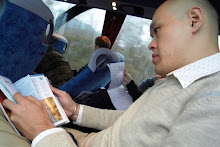


 Posts
Posts

